Sunday, February 24, 2008

Place of Man

Inuvik is a town that I described as “ugly” in a post last September. Back then I was just passing through, and I had only spent about an hour on the main drag of town. It was hard to see past its industrial exterior. I am officially withdrawing that remark. After having lived here for almost a full week, I can say that Inuvik is beginning to grow on me.

Maybe it is the rusted ships that dot the edge of the river. Old tugs that may yet be seaworthy and have found shelter from the ice on shore. I have started walking the dog on a route that takes me past three of them- five if it’s warm and I have the energy to go a bit farther. I can almost convince my self I’m back in Newfoundland or some seaside town in Nova Scotia.

Out on the frozen river you can see the headlights of trucks heading to and from Aklavik and Tuktoyaktuk. You can also hear the whine of skidoo engines being wound out and pushed to their limits. They are always in pairs and they seem to be drag racing on that long, straight, flat expanse.


I think part of my newfound love for Inuvik is the landscape. Tulita had nice mountains and rivers, but I felt landlocked there. Here I know that the ocean is just a hundred clicks up river. It is difficult to explain that feeling of being landlocked unless you’ve lived your whole life by the ocean. I remember the first time I went to Ontario when I was 17. The thought would occur to me several times every day that I was so far from the ocean.

Along with the comfort of the ocean is the peace of mind that the road brings. Inuvik is the end of the Dempster Highway. If I was so inclined, I could purchase a beat up car and just hit the road straight down to Dawson, Whitehorse, and BC.

Although I consider myself a pretty cheap guy, and I’m not one to shop for the sake of shopping, it is great to know that there are two hardware stores here in Inuvik. Three if you count the industrial supplies shop. Being a male, I have a gene that predisposes me to love hardware stores. There is no retail outlet more beautiful than one that specializes in practical things. The one possible exception is a bookstore, which Inuvik also has, along with a nice little library, and the Northwest Territories largest magazine stand. You would think that Yellowknife, with 20,000 people, would have the largest magazine stand. But no, it is here in Inuvik, with a population of about 3,000.

Inuvik celebrates its fiftieth birthday this summer. It was founded as a place to resettle the people of Aklavik because that town was - and is - prone to floods. Of course some people refused to move, and Aklavik survives to this day. I hope to travel there in the coming weeks, although our company vehicle does not have four wheel drive at the moment. Inuvik simply means “Place of Man” in the local language. It is the northernmost town in Canada. There are other communities at higher latitudes, but not incorporated towns.

I am loving my job. I can’t put into words how good it feels to go into an office and write every day. I love going out to meet and interview people, but at the end of the day I have to sit down and carve out a story of just 300 to 500 words. It is challenging, but at the same time I know that I can do it. Working at the store became this insurmountable challenge. I knew that no matter how many hours I put in, and no matter how hard I tried, there would always be more to do. I could never be satisfied with the results I received from my efforts. Here I might file a poorly written story, but when it is filed it is done and I can go home knowing I learned from my mistakes and strive for something better next time.

One thing I’ve learned is that people have short attention spans. We try to say more in fewer words. So if you’re still reading this, I’ve already taken you further that the average newspaper article. I will be trying to post more regularly now that I have an abundance of time. This was one of my first real weekends in years. A weekend has to be long enough so you can afford to waste some time without feeling guilty. A weekend isn’t a weekend unless you get to have it on Saturday and Sunday. There is a vibe you get on those days that you just can’t get on a Tuesday.

Sunday, January 06, 2008

Chapter Two

December was long and eventful here in our now-packed-up house. It started with a job offer from Northern News Services, a company based in Yellowknife that publishes weekly and bi-weekly papers all over the Northwest Territories and Nunavut. I had been sending them photos for a while and they had my resume on file, so when a job in Inuvik opened up, they called to ask me if I was interested.

These decisions are not easy to make, especially over the Christmas season, but after talking it over, Nicole and I decided to go for it. It wasn't easy telling everyone at the store that I was leaving, but they were supportive to say the least.

On the 23rd, Nicole started having pains in her stomach. There is no doctor in Tulita, but the nurse called the hospital in Yellowknife and described the symptoms. We were told it was nothing too serious. The pain subsided a bit over Christmas, but by the 29th it was back and we decided that she couldn't wait any longer to go see a doctor. It meant paying several thousand out of our own pocket for a last minute flight to Yellowknife. It is true that health care is free in Canada, but only once you're inside the hospital. How you get there is up to you.

Once inside, the doctors seemed fascinated by Nicole's conflicting symptoms. There was a steady stream of specialists called in from their Christmas holidays to perform test after test. I felt relieved knowing that so many doctors were putting their heads together on her case. I'm sure it was because of her unusual symptoms. We later learned that the patient in the bed next to us had languished for four full days before finding out her appendix had ruptured. They kept telling her no doctors were available to do an ultrasound, even though we knew one had come in the day before to perform an ultrasound on Nicole.

In the end, Nicole's illness wasn't too serious. It was an overreaction of her immune system that was painful more than anything else. It had a long name that even the doctors seemed unable to pronounce. After four nights and five days in Yellowknife, I jetted back to Tulita to begin packing our stuff.

And that brings me to today, my last day living in Tulita. It will be spent ferrying boxes and doing some last-minute packing. Tomorrow afternoon I'll arrive in Yellowknife and begin my career as a journalist. I set out in 2001 with the dream of making a living as a writer. Seven years later I've finally made it a reality. We will see how long it lasts, but at least now I can say I've tried.

By the sounds of things, one of my first tasks as a reporter will be a 10-day road trip through most of the communities in the southern part of the Northwest Territories. I don't want to say too much yet except that if it goes ahead, it will be the trip of a lifetime for me. I can't wait. Not sure when my next posting will be because my computer will be shipped to Inuvik. I'm scheduled to go there sometime in mid-February. Stay tuned.

Sunday, December 02, 2007

On Coldness

The day I arrived back in Tulita From Fort McPherson in early October, the ground was already blanketed with snow. I was told that it had just fallen the day before I arrived. It hasn’t been above zero degrees Celsius here in Tulita since that day. We have had several heavy snowfalls since. The river is now a frozen mass of ice chunks, and workers are already venturing out on Skidoos to prepare the ice bridge for the winter road.


Last week the temperature dipped to below minus thirty for a few days, before shooting up to minus ten overnight. It struck me how nice minus ten felt after the extreme cold. Most of you living down south rarely feel temperatures as cold as minus thirty on a regular basis. You might think that anything below freezing is cold, but once you become acclimatized to the cold, and as long as you dress properly, you begin to become a connoisseur of the cold. You can judge the difference between zero and minus thirty in the same way you might judge a spring or summer day on the opposite end of the thermometer.


Zero Degrees Celsius to minus 10 - Great weather for walking, even if there is a bit of a breeze. In temperatures down to about minus seven you can comfortably go out without a hat or mitts for 15 minutes or more. It is in this temperature zone that snow is most likely to fall. Snow tends to be wetter and heavier. The sky is usually overcast when it is this warm, the clouds being the cause of the warmer weather.


Minus ten to minus twenty - This is an acceptable cold as long as there is no wind. I enjoy going out on still nights such as this because the air is crisp and the sky is usually clear. It is the best weather for northern lights viewing. Gloves and a hat are a must, but you can take them off for a few minutes without any problems in order to unlock a door or fiddle with the settings on your camera. The snow is dryer and more powdery.

Minus twenty to minus twenty five - This is the threshold between a nice day and a not so nice day. Minus twenty is still bearable. Once it dips below minus twenty, you think twice about going out. If it is minus twenty-five and the air is stilll, it isn’t too bad. But if there is any wind, you feel it. Regardless of the wind, this is the temperature where the air begins to shock your lungs. When I step outside at this temperature, I always let out a short involuntary cough. Although wind makes this temperature feel much worse, the colder it gets, the less likely it is to be windy.


Minus twenty five to minus thirty five - This is where it gets really cold. Gloves are ineffective at this temperature. You need mittens, and you will often put your thumb in with the rest of your fingers. The air is almost always completely still once it gets this cold. Because the air is still, it can be deceiving. You might think you can run outside for just a minute, and at first you might not even feel the cold the way you might on a damp fall day. But within a minute, any exposed skin will begin to ache. Touching anything made of metal can be dangerous and your skin will register a burning sensation. I find that when I’m out in this weather and my face or hands begin to ache, I will begin to feel a slight panic. I think it is a fight or flight mechanism, as if my body knows that I’m in danger. If I’m five minutes away from the house, I will pick up the pace and do anything to cover up exposed skin.

Thirty five and below - Nobody goes outside if they can help it. Even skidoo riders, who insist on joyriding at twenty below and beyond, stay inside. Your truck will not start unless it is plugged in. The air becomes remarkably still. Breathing can be painful. Frostbite can begin within minutes. Even when you are inside, the floor can feel cold and there is a chill that you cannot shake. Keys will break off inside locks at this temperature (or so I have been told). School is cancelled.

All of this assumes you are wearing a down filled parka, long johns, and properly insulated boots. Cotton long johns are only good down to ten below, after that, fleece long johns are a must if you want to feel comfortable.

Tuesday, November 06, 2007

Hell Hounds and Little Green Men

People around town have been reporting a wolf on the loose for the past week or so. On Monday, our neighbor’s dog was killed and eaten by a wolf. On Tuesday morning, around 4 a.m., our neighbor Jimmy shot this wolf in his yard.


The picture doesn't really do justice to the size of this dog. It is too bad this big guy couldn’t have stayed out in the wild, but I guess he was tempted by all the snacks tied out in everyone’s yard. We bring our dog in at night.

In other news, people in the town just east of us (only about 100km as the crow flies) spotted a UFO the other morning. It would be easy to pass this off as a star, except the footage was shot in the daytime. Nicole knows the folks who shot this footage. They aren’t they type to go about perpetrating hoaxes. Some reported seeing red lights shooting out of the object. I'm sure there is a rational explanation. My boss thinks it's a drop of water on the camera lens. You be the judge.

Monday, October 29, 2007

South to Old Fort Point

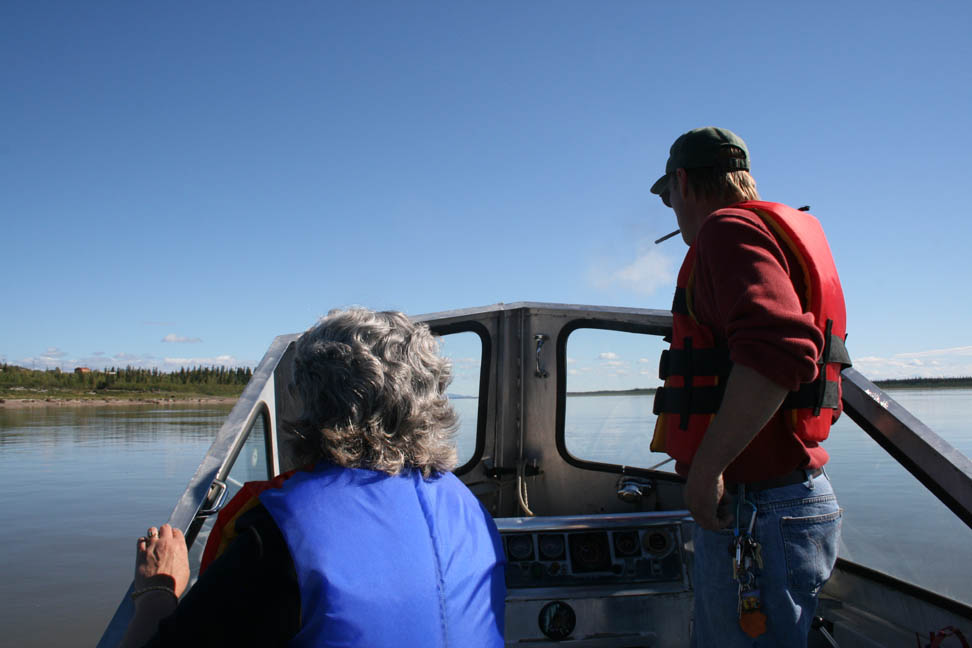
Captain Ron showed up in Tulita the week after he took me four wheeling in Norman Wells. He came by boat on a Saturday, and on Sunday morning he called Nicole and I, asking us if we wanted to go for a little tour south on the Mackenzie.

This was the last weekend in August. It was still summer and it was a sunny, warm day, but we put on sweaters because it can get surprisingly cold out on the water.

Ron’s wife Wendy was along for the ride too. Ron had one of his trademark captain black cigars clutched between his teeth as we drove past flocks of geese and ducks already gathering for their flight south.


We traveled for about an hour and a half past endless trees and rocks. Occasionally we passed groups of cabins and with blue-tarp teepees outside. Ron seemed to know who owned each one.

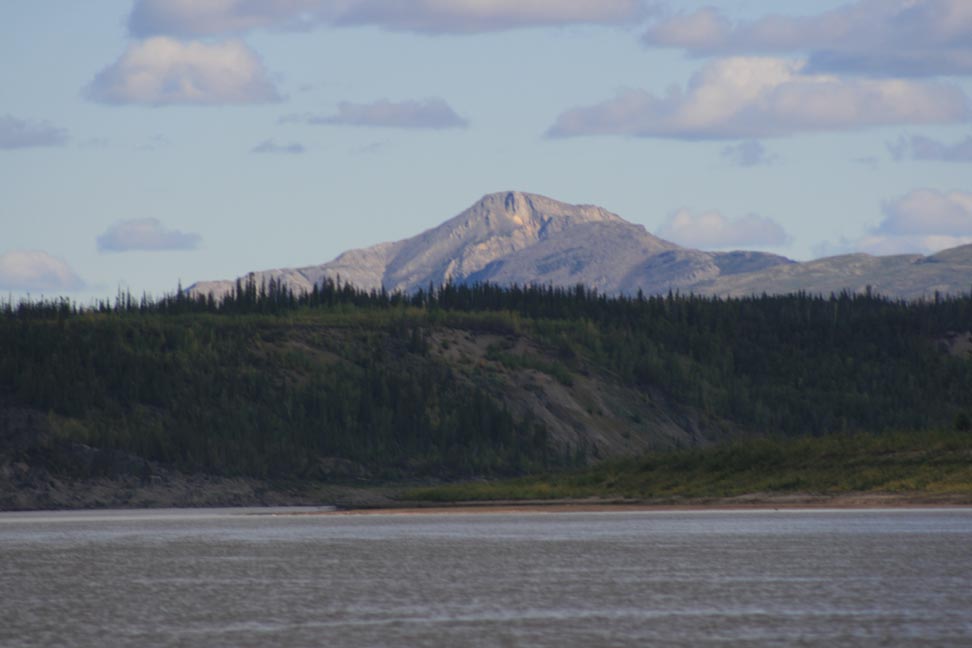
The scenery grew a bit monotonous after a while, but every so often you would round a bend to see a mountain off in the distance. In the exposed cliffs of the riverbank we could see coal seams and once, a layers of kimberlite, the rock geologists look for when they are looking for diamonds.


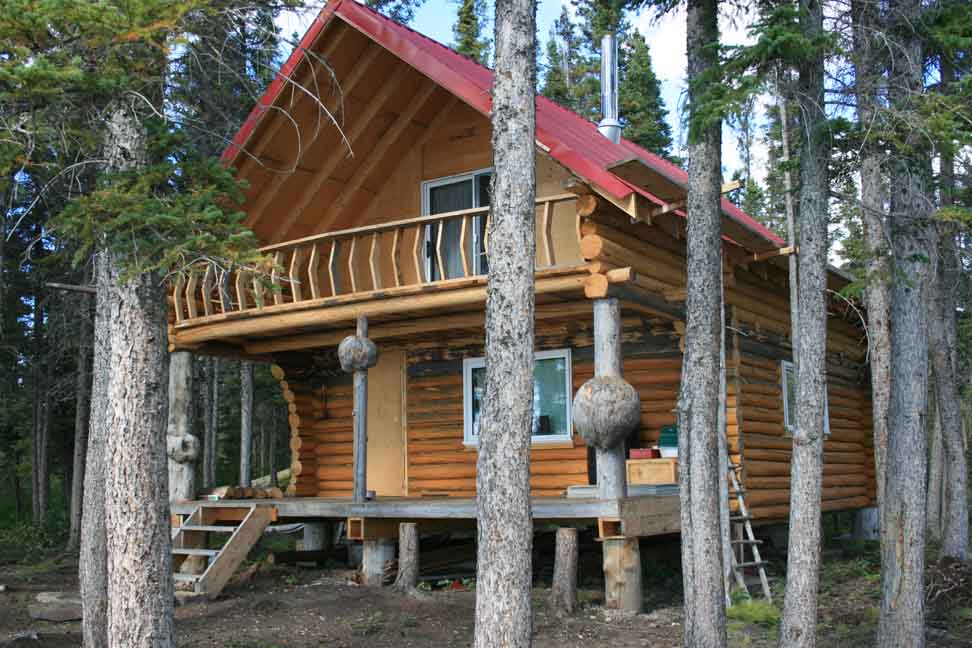
We stopped at “Old Fort Point,” where a family from Tulita has a group of log cabins. No one was home, but we got out to admire the cabins. They were beautifully constructed, but small and humble at the same time. Some were barely twenty feet by twenty feet, but they had all one could ask for.

Old Fort Point was once the site of a fort, possibly the original “Fort Norman” and Ron said you can find the ruins of the fort if you look, but we were starting to run short on time, and he said there wasn’t much to see. No Parks Canada interpretation plaques here. Just the name passed down for several hundred years by the locals.

I was getting cold as we traveled back, but I tried to ignore the discomfort and take in the scenery. About halfway back, someone spotted a black bear on the eastern bank, and Ron spun the boat around so we could go in for a closer look. It of course took off into the woods before we could get really close.

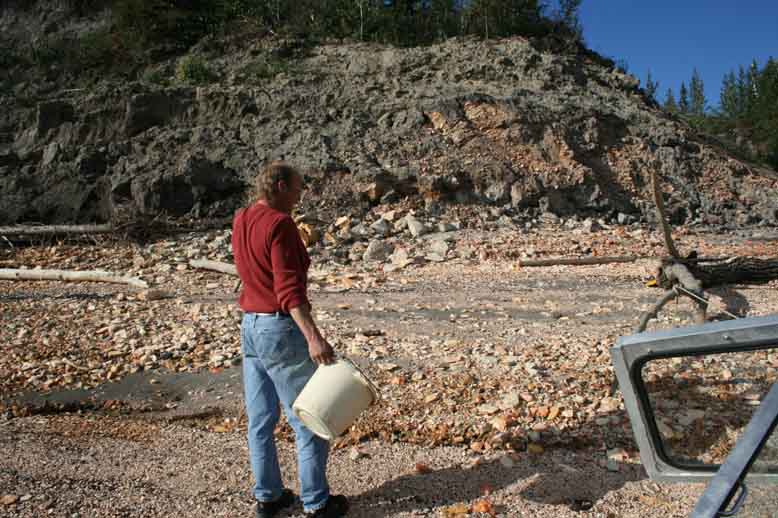
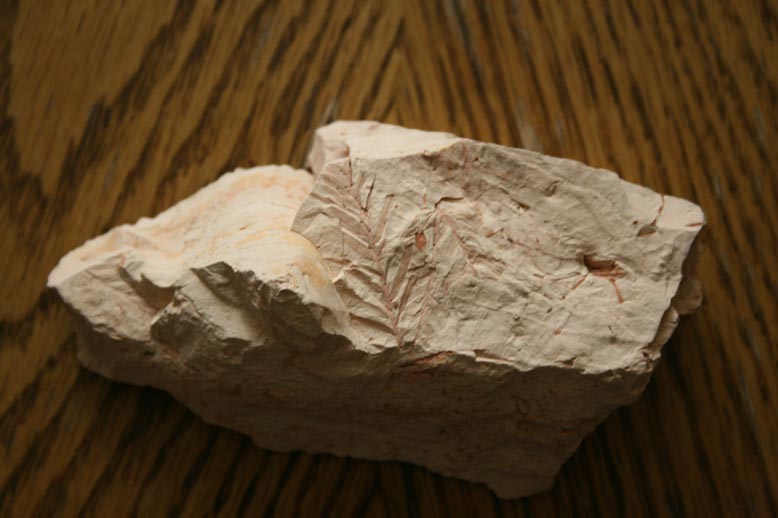
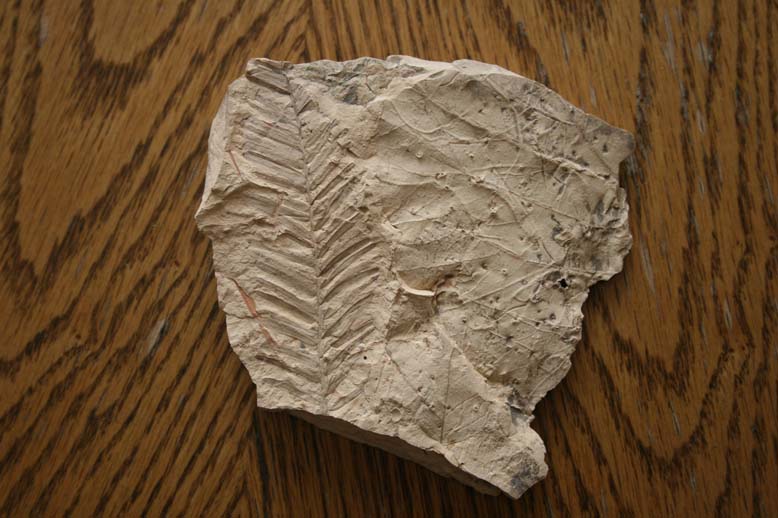
Four miles south of Tulita is a spot known locally as “The Smokes.” It is where an exposed coal seam has been smoldering for hundreds, perhaps thousands of years. Alexander Mackenzie, the explorer for whom the river is named, noted the smoke rolling from the ground when he first paddled up the river in 1789. Although it was getting late in the day, Ron’s wife Wendy insisted that we stop in for a look. They had mentioned something about fossils, but I was unprepared for what we were about to find.


There was a bit of smoke coming from the cliffs up the river. You could smell it in the air. The beach was littered with pink colored rocks, and on closer inspection we found that each pink rock was covered in leaf imprints. It was literally impossible to pick up a rock that didn’t have an imprint of some kind. The challenge wasn’t finding a fossil, but finding a good, clear imprint that stood out from the tens of thousands of mediocre fossils.

Ron started a small fire to roast some wieners. Nicole, Wendy and I clambered over the banks, collecting some of the better specimens we could find. Ron is an evangelical Christian and he was unimpressed by the fossils. Earlier in the day I had told him about some petrified wood I had found on the banks of Great Bear River, and he told me how wood actually petrifies over decades instead of thousands of years. He said there is a museum in the states has a petrified tennis shoe. Instead of looking for fossils, he filled a Rubbermaid tub with the rocks to use as gravel on his walkway.

With our boat heavily laden with a few hundred extra ponds of rocks, it was difficult to get back up to speed. We arrived back in Tulita around six and unloaded our fossils. Ron still had an hours trip ahead of him north to Norman Wells. We thanked them for another memorable trip.


Monday, October 22, 2007

Owl

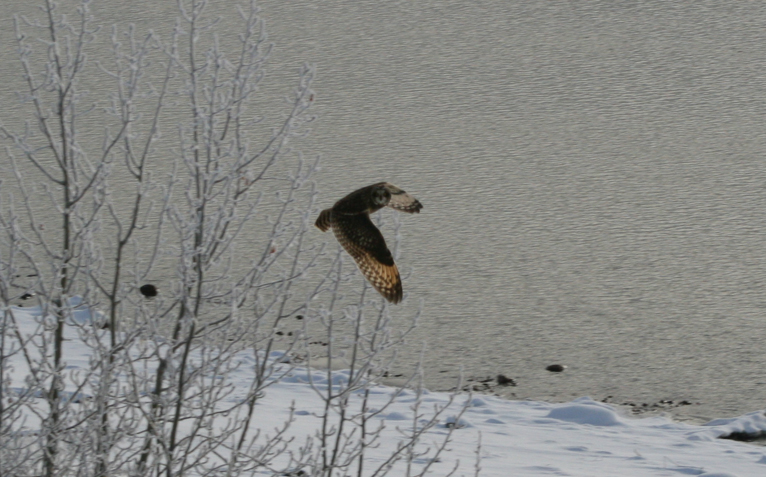
We don’t have as many brushes with wildlife as you might expect here in the north. I’ve seen some wolves from a distance, bears, one moose, and dead caribou, but on Sunday I saw my first owl. I was on the phone with my folks when I saw a brown bird swoop past the warehouses in our front yard. I waved Nicole over. At first we thought it was a Peregrine falcon from the colouring of the wings.

I got bundled up and trudged outside through a foot of snow to get some pictures. As soon as I approached the edge of blueberry hill, I saw the bird take off for the beach. I slowly pursued it but it flew about a kilometers down the beach and perched on a log.

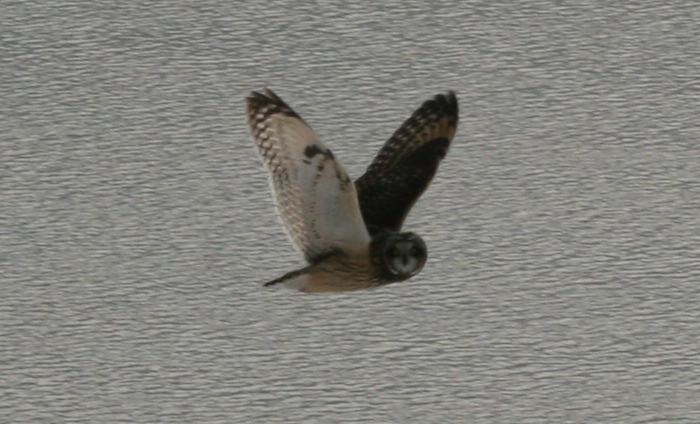
When I got back to the house and downloaded the first pictures, they were blurry at best, but when I zoomed in on pictures of the bird perched on a log, I noticed that it had the shape of a owl.

In the afternoon it returned, so I headed out again and this time the pictures were much better. It was, as I had suspected, an owl.


Thursday, October 18, 2007

Buttermilk

Fort McPherson’s store shares its trucks with the North Mart in Inuvik, which is the end of the line for the Dempster highway. The delivery truck usually stop in McPherson first to unload their freight, and then continues on to Inuvik.
One night, while we were unloading the truck, Mike the grocery manager noticed something funny.
“It looks like they’ve got a pallet of buttermilk in there! Someone must have really screwed up the order.”
Buttermilk is something I’ve never ordered. Mike once ran the dairy section in the Inuvik store, and he said he usually ordered 12 1 litre cartons. That was for a population of 6000 people.

Today I found out what happened to the buttermilk:

Inuvik inundated with free buttermilk bounty